Ask a Georgian when you should visit and you’ll get a counter-question: what do you want the country to feel like? Georgia’s seasons are genuinely distinct — the same valley can be a snowfield in February and a wildflower meadow in June. This guide walks through the year the way we plan it for guests.
Spring (April–June): the green surge
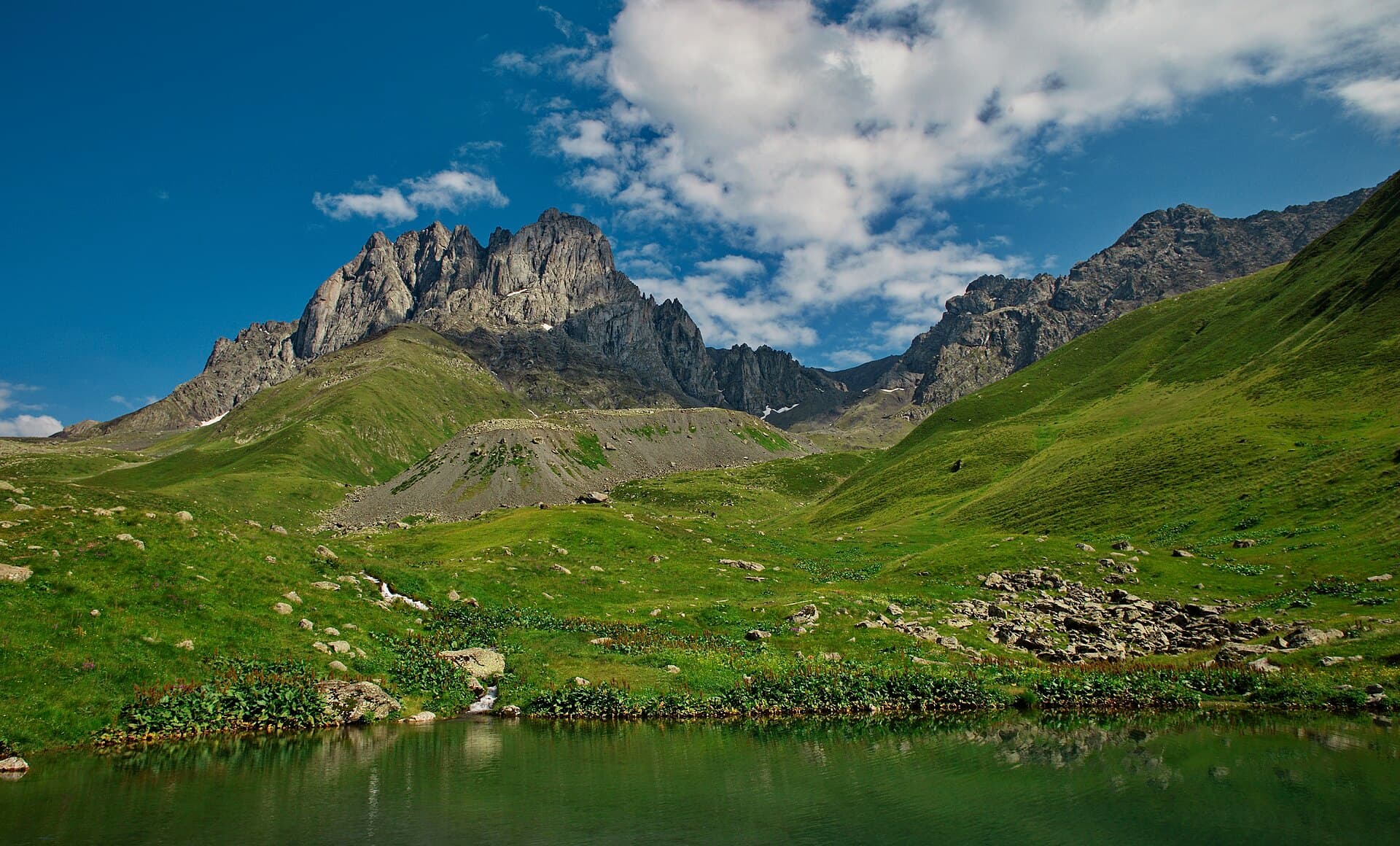
Spring arrives from the lowlands upward. Cities and wine country turn green and comfortable weeks before the high passes open; by late May the mountain valleys join in, and June is arguably the prettiest month the Caucasus has — snow still on the peaks, everything below in fresh green.
- Best for: walking cities, food trips, first mountain visits without winter gear.
- Worth knowing: high routes (Ushguli, high passes) may still be muddy or closed early in the season — plans should stay flexible.
Summer (July–August): the escape season
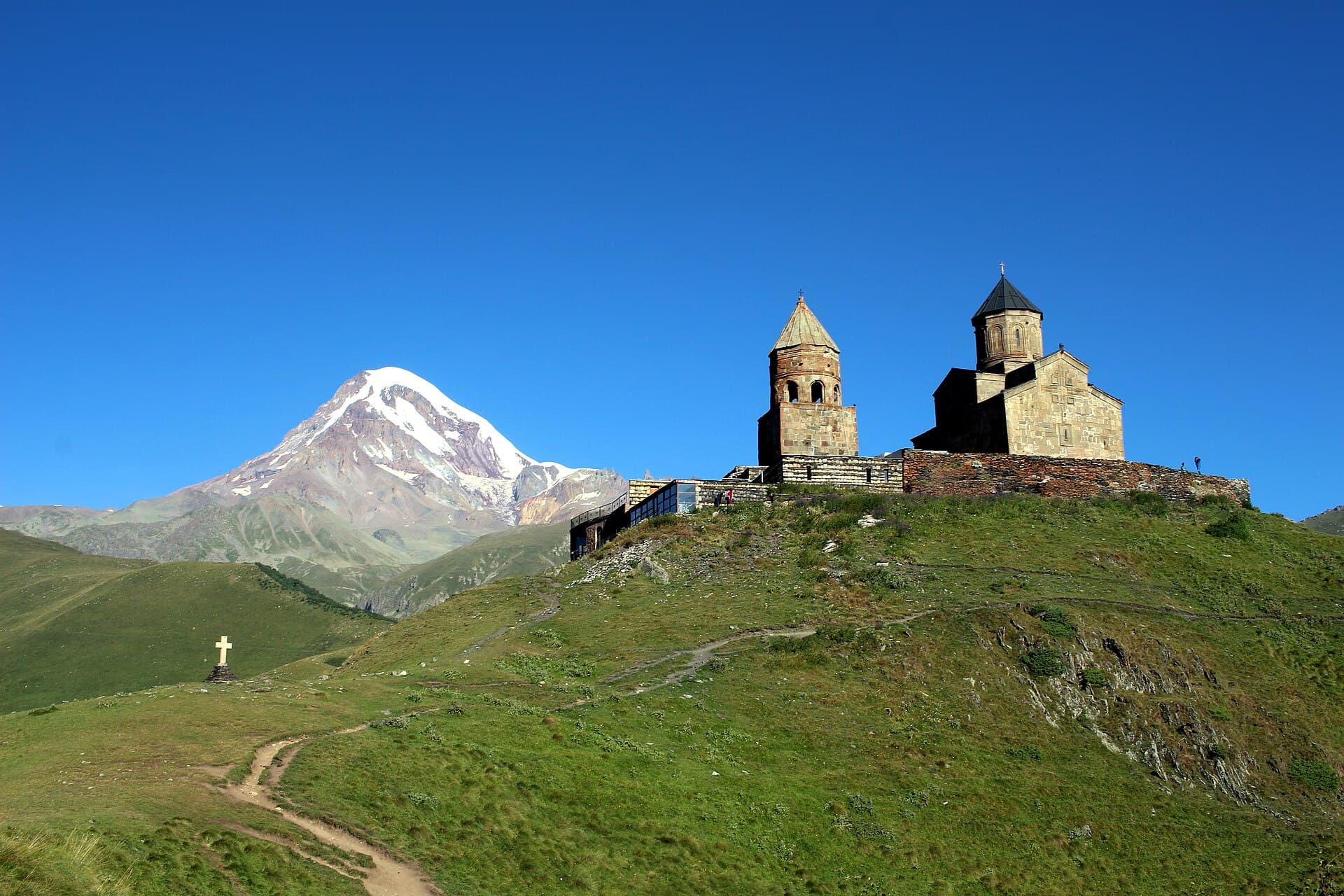
Lowland afternoons get properly hot — which is exactly when the high Caucasus is at its best. Kazbegi, Gudauri’s green slopes and Svaneti stay fresh when the cities swelter, and mountain rivers run cold all summer. This is the season our guests from the Gulf choose, for obvious reasons.
- Best for: family mountain trips, alpine walks, escaping serious heat at home.
- Worth knowing: it’s also peak season — mountain guesthouses reward early booking.
Autumn (September–October): harvest and gold
September keeps summer’s warmth without its crowds, and October turns the country gold. It’s harvest time — rtveli — when wine regions press the new vintage and every supra gets louder. Mountain weather stays walkable well into October most years.
- Best for: food and wine trips, photography, hiking without the heat.
- Worth knowing: mountain evenings cool down fast — pack layers.
Winter (December–March): snow country
Winter belongs to the mountains. Gudauri’s high, treeless slopes usually hold reliable snow through the season, and the drive north becomes a white-world spectacle in itself. Tbilisi in winter is quiet, moody and cheap by comparison — with sulfur baths doing their best work.
- Best for: snow days, skiing, first-snow family trips, bath-and-supra city breaks.
- Worth knowing: high mountain roads can close temporarily in storms — winter itineraries need slack, and that’s normal here.
So when should you come?
For most first trips mixing city, mountains and food: late May to early July, or September. Escaping summer heat: July–August in the high valleys. Chasing snow: January and February are the safest bets. And if your dates are fixed anyway — tell us what they are, and we’ll shape the country to fit them honestly.
Sources & further reading
Visa, border and safety details change — always confirm time-sensitive information with the official sources above before travelling.